
Marsabit administrators trained on improving grassroots data management
Updated

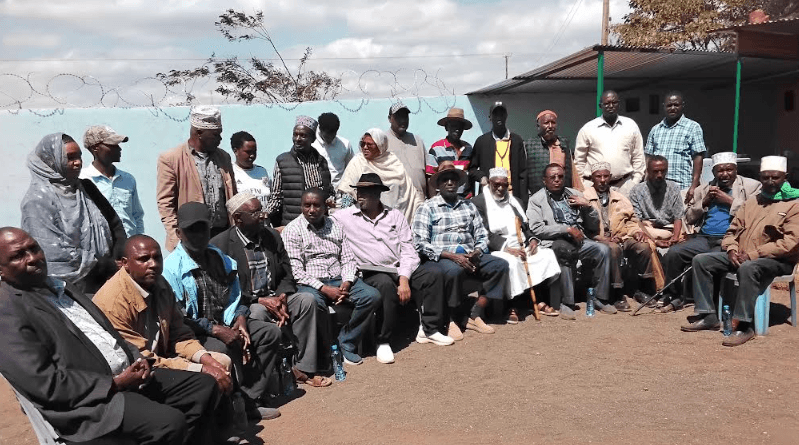
Assistant County Commissioners, chiefs and assistant chiefs in Marsabit County have completed a three-day training programme on grassroots data management aimed at improving the collection, accuracy and use of community-level information in government planning and service delivery.
The training, held in Saku Town, brought together National Government Administration Officers (NGAO), officials from the State Department for Economic Planning, the Kenya National Bureau of Statistics (KNBS), Lidatech Consultants and other technical teams.
The programme focused on the National Planning Architecture, legal frameworks and community data systems, equipping participants with skills to collect, verify, manage, analyse and submit reliable information from the grassroots.
The organisers said accurate and timely data was essential for evidence-based planning, resource allocation, implementation of government programmes and projects, monitoring and evaluation, and national development decision-making.
The training also sought to strengthen coordination between national and county government structures and ensure that information gathered from communities is used to address local priorities, service delivery gaps and emerging socio-economic challenges.
During the closing ceremony, Senior Economist Alex Kiiru, who represented the Principal Secretary for Economic Planning, Dr Boniface Makokha, said the programme had provided an important opportunity for administrators to strengthen their understanding of grassroots data management.
Kiiru said the Principal Secretary appreciated the participants’ commitment and active engagement throughout the three-day programme. He also commended the NGAO officers for setting aside their official duties to attend the training.
The Principal Secretary further recognised Lidatech Consultants and the technical team for sharing their knowledge and experience with the administrators.
In his speech, Makokha said effective government planning must be anchored in credible, timely and relevant data. He noted that reliable information could not be generated from Nairobi alone, but required functional systems through which information from communities, villages, wards and sub-counties is systematically collected, verified, analysed and transmitted through the appropriate government structures.
Makokha said such information should be analysed and brought to the attention of relevant planning and administrative structures so that government policies and programmes remain responsive to realities on the ground.
He highlighted the role of National Government Administration Officers in the collection and transmission of grassroots information, noting that their presence across the country and direct interaction with communities made them an important link between citizens and government.
The officers, he said, were well placed to understand the challenges facing local communities and communicate those concerns through established government channels.
Speaking during the closing ceremony, Deputy County Commissioner Peter Kimani thanked the administrators for attending what he described as an important programme on grassroots data management.
Kimani said the training was timely as the country moved towards a development framework that increasingly depended on data-informed planning and decision-making.
“The work of chiefs and assistant chiefs places them in a unique position to understand what is happening in communities and to ensure that the information reaches the relevant government offices,” Kimani said.
He explained that the training programme was being implemented in phases across the country. The first phase covered 12 counties, while the second phase would cover 25 counties before the programme is extended to the remaining counties.
He noted that administrators could eventually be required to account for information submitted through government data systems. They should therefore ensure that all information provided is factual, accurate and timely.
He said grassroots administrators had a responsibility to help bridge that information gap by ensuring that government institutions received accurate accounts of developments within communities.
The information, Kimani added, should enable the government to determine what was working, what required improvement, the challenges affecting implementation and possible measures to address them.
He urged the administrators to work closely with communities, county government officers and relevant national government departments to ensure that local development priorities were properly captured and communicated.
The training sessions covered several aspects of grassroots data management, including data collection, validation, quality assurance, reporting, information management and the use of digital tools.
Participants were also introduced to procedures for collecting and sharing information through appropriate government systems. The organisers stressed the need for consistency in data entry, accuracy in reporting and confidentiality in the handling of information.
The use of smartphones and other digital tools formed part of the practical learning activities. The approach was intended to improve the speed and efficiency of collecting information from communities and transmitting it to the relevant offices.
The organisers said the quality of decisions made by government institutions depended largely on the quality of information available to them. Inaccurate, incomplete or delayed data could affect planning, budgeting, project implementation and assessment of public services.
The programme therefore encouraged administrators to treat data collection as an important public responsibility rather than a routine administrative exercise.
Participants were asked to maintain close contact with residents and local leaders so that information on emerging needs, public services and development activities could be collected promptly.
They were also encouraged to share verified information with the relevant planning and administrative structures instead of allowing it to remain unused at the point of collection.
The training brought together officers who operate at different levels of the national government administration system. Their participation was expected to strengthen the flow of information between communities, sub-counties, counties and national government institutions.
The collaboration among the State Department for Economic Planning, KNBS, NGAO, Lidatech Consultants and other technical teams was highlighted as an important component of the programme.
The organisers said cooperation among institutions would help promote common standards in the collection, management, analysis and use of grassroots data.
The training also provided an opportunity for administrators to discuss practical challenges encountered while gathering information in remote and sparsely populated areas.
Participants were encouraged to apply the skills acquired during the programme to improve the reliability of information submitted from their respective areas of responsibility.
At the end of the training, each member of the NGAO team received a certificate of participation.
Former Marsabit councillors seek intervention on gratuity payment
Former councillors from across Marsabit County have appealed to President William Ruto to intervene in the long-standing delay in…

Government extends relief assistance to Marsabit
The national government, in partnership with the Oscar Junior Foundation and other stakeholders, has launched the distribution of…

Multi-agency team in Marsabit declares war on illicit drugs, brews
A Multi-agency team comprising security agencies, the County government, and other government departments has declared war on illi…
Comments
Join the discussion
Anyone can leave a comment on this story. Keep it civil and on the story — comments that break our house rules are removed.
No comments yet — be the first to share your view on this story.