Declining dairy herds and milk output in Kenya signal urgent action
Updated
Global perspective Over 80% of the global population (roughly 6.5 billion people) consume dairy products globally. Over 130 million to 150 million dairy farms support between 600 million and 1 billion people within the planet.
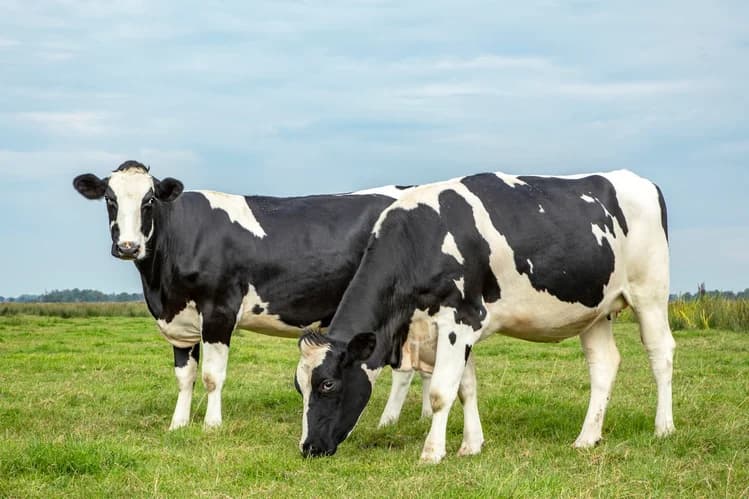
The dairy demographic is heavily dominated by Friesians (about 80%), followed by Ayrshires (15%) and small numbers of Jersey and Guernsey crossbreeds. The local cattle herd is bigger than the dairy herd but the figures for the former keep changing due to pasture availability, climate change and the security issues.
Meru Central Dairy Union is currently doing 670,000 litres of milk daily with more than 20 billion revenue every year. This is one of the best managed dairy cooperatives and has a lot of impact in terms of improving livelihoods and creating direct and indirect employment opportunities in the region. Livestock production has no seasons like the crop farming practices. It is the only farming enterprise that ensures food and cash supply throughout the year.
However, there is no business that doesn't have challenges that create barriers in the continuity and sustainability. These challenges help us to explore the possibilities of seeking for solutions. It is worrying that the population for the dairy cattle has gone down by 30k in the last one year. The numbers recorded in the last year statistics showed 268k and after one year, the number has dropped to 238k. This is a great concern to all the stakeholders since the dairy industry is supporting many families. It means, in the next 5-10 years we might have no cows in our homestead. Why sudden change in the dairy demographics?.
I participated in one of the dairy society's AGM where farmers expressed their concerns about the low fertility levels in the herd that might be reducing on the dairy birth rate. "I have three dry cows for the last one year in my farm. The sexed semen is not making my cows conceive as expected", one farmer quipped while others murmured to show the great pains that they are going through.
I visited Kiambu county the month of September 2026 and heard dairy farmers complaining of high mortality rates due to foot and mouth disease(FMD). We usually have four strains of the FMD which should be investigated to show the most prevalent strains per county for accurate intervention.
The milk production has sharply declined and we cannot meet the local demand of milk consumption in Kenya. It is reported that there is rationing of packed milk at Points of Sale in cities and urban areas. I witnessed this problem when I did shopping last week in one of the Nairobi city supermarkets where I found milk shelves written, "Don't pick more than 4 packets". Guys, there is a crisis in Kenya in the availability of the milk as a key component of our daily food. Where did the rain start beating us?
The dairy experts should convene an urgent stakeholders forum to explore ways of changing the ugly situation that may continue affecting the overall productivity of the dairy farming. Could this be due to poor animal nutrition, FMD, ECF or poor timing of Artificial Insemination? I am ready to be part of the team that could come up with such problem -solution approach to secure the farmers future. Let us make it happen on timely manner to save the white gold.
Comments
Join the discussion
Anyone can leave a comment on this story. Keep it civil and on the story — comments that break our house rules are removed.
No comments yet — be the first to share your view on this story.